Architecture Computational Technologies
Explore design research at the frontiers of architecture through experimentation in computational design, robotic systems applied to fabrication and interactivity, and materiality. For more information please contact ms.act@nyit.edu
Results for "LECTURES" on Architecture Computational Technologies
MS in Architecture, Computational Technologies Program Information Session Fall 2022
Blog | Feb 23, 2022
Video of Information Session 2021 explaining the MS ACT Program by
Director Pablo Lorenzo-Eiroa. The video contains partial information and
content that may be out of date. The Program may be modified for Fall
2022 pending approvals.
Read More
Panoramas of Cinema: Image Search Lecture by Jorge Orozco, Dr. Sc. ETHZ
Blog | Feb 07, 2022
MS_ACT
Master of science in architecture,
computational technologies
MS_ACT LECTURE SERIES S2022
Informed actualizations: From AI to physical computation
The MS ACT Lecture Series aims at discussing research framed by invited guest speakers. The MS ACT Program focuses on architecture expanding relationships between science, technology and culture through innovation in algorithms, simulations, ai, robotics, robotic fabrication and materials. The spring 2022 lecture series discusses alternative means to understand the dialectics between the ideal digital and the physical digital. Within an architecture of information, ai, robotics and materials are thought as actualization interfaces. This process understands information flows and their actualizations as architecture.
Read More
Buckminster Fuller's trajectory - Dymaxion to the Geo Lecture by Michael Wen Sen Su, Pratt Institute
Blog | Feb 02, 2022
MS_ACT LECTURE SERIES S2022
LECTURE: February 14 2022 2 p.m. – 3 p.m. est via zoom
Of Houses and Surfaces: Re-tracing, and re-thinking, R.
Buckminster Fuller's trajectory from the Dymaxion to the Geo
Michael Wen Sen Su, Adjunct Associate Professor, Pratt Institute School of Architecture
Despite his lack of formal architectural training, R. Buckminster Fuller's contribution to architecture has been profound and unmatched. While his life's work is well studied, due, in no small part, to his lifelong drive to document every aspect and conserve every correspondence of his life, this lecture seeks to re-trace, and thereby to re-think, the trajectory of his work, which was marked at its inception by his idiosyncratic, impossible Dymaxion House, and at its terminus by the fanciful, all too possible Geodesic dome. In particular, this lecture seeks to reconsider Fuller as the innate outsider whose uncanny capacity for thinking outside the box led him to conceive of architecture not merely as the provision of shelter or the control of environment, but as the synthesis and manipulation of information.
Read More
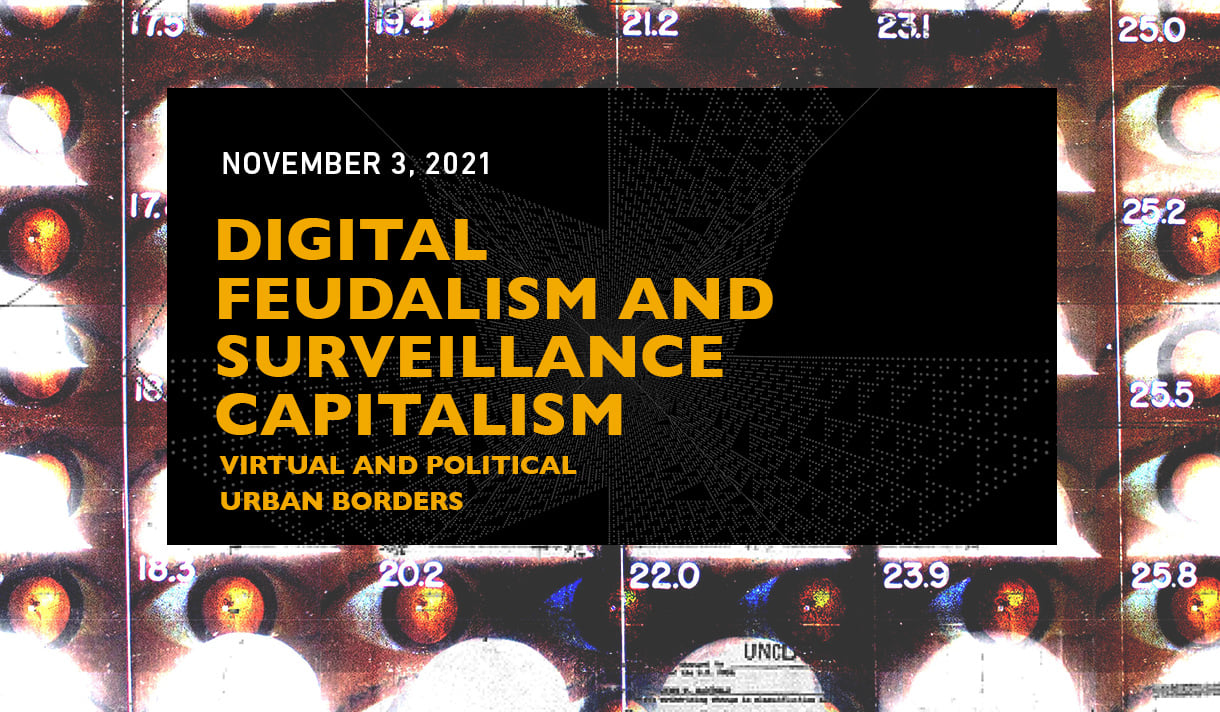
DIGITAL FEUDALISM AND SURVEILANCE Lecture SEAN ANDERSON, JANA LEO, M7red, ZULAIKHA AYUB
Blog | Nov 18, 2021
Borders and cities index more an economic system than the previous modern ideals of socio economic stability, health and equity. These economic systems are measurable in how the city form follows finance (Willis) rather than environmental, urban and architecture parameters. What are the consequences of Capitalism in architecture and urbanism? How can we denaturalize cities as business and present alternative scenarios? In a globalized economy, people cannot move but goods can. How can we disclose implicit and explicit political boundaries in the current neoliberal model? What are the possibilities for a Post-Capitalist Urbanism in the Post-Anthropocene? How is technology enabling or resisting these processes? How is the current Feudal Capitalism in Computation reinforcing or displacing this logic and physical and political borders?
Read More
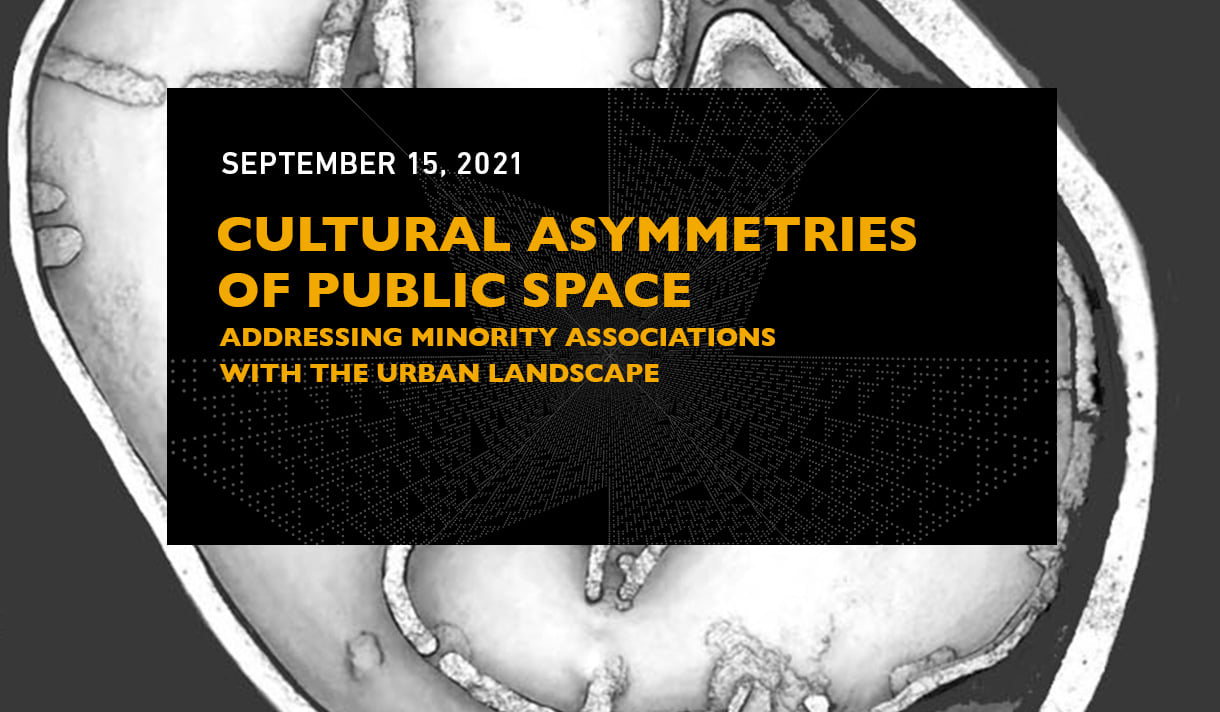
CULTURAL ASYMMETRIES OF PUBLIC SPACE 2021 Lecture JONAH ROWEN and CRAIG L.WILKINS
Blog | Sep 29, 2021
LECTURE ABSTRACT:
Recent history shows how public space can positively and negatively affect people from different ethnic and cultural groups. Urban areas as symbolic indicators can have high emotional registers and be simultaneously inviting or rejecting depending on the occupants. Discussions renew the debate of the multidimensionality of urban regimes concerning these asymmetries of urban space, especially in different minority groups.
Making sense of these differences requires a multidimensional approach to envisioning urban design involving an understanding of the histories, the symbolism and effect of the attached emotional registers on different groups, and the presence of new voices in the imagination of public space.
The aggregation of these ideas allows for a deeper insight into how conceptions of public space, urban visibility, and the addressing of public emotional registers in construction, oversight of, ownership of, and intersection with institutional racism.
Departing from a preconception of equal access, the panel discusses collective rituals in streets, parks, and squares of city space and the design and management practices that should reflect various cultural experiences. The talk covers the need for designers and managers to know how places may be interpreted differently by different ethnic minority groups and work towards inclusive design.
Read More
DIGITAL FUTURES INCLUSIVE FUTURES 2021 Lecture Tom VEREBES and Pablo LORENZO-EIROA
Blog | Aug 14, 2021
DIGITAL FUTURES INCLUSIVE FUTURES 2021
Workshop Exhibition-Lecture Presentation and Discussion US Northeast Region
Kinectoscapes / Mona Ghandi, Washington State University
Creative AI Ecologies / Shermeen Yousif, FAU
Digital Unforgetting / Neady Oduor, Canadian Centre of Architecture
DESIGN DATA / Tom Verebes & Pablo Lorenzo-Eiroa, NJIT
Conversations on Inclusivity / Gustavo Rincon, UCSB
Read More
NYIT SoAD at the 17th International Architecture Exhibition, Venice Biennale
Blog | Jun 08, 2021
NYIT School of Architecture and Design (SoAD) has been invited to participate in the 17th International Architecture Exhibition at the Venice Biennale from May 22 to November 21, 2021. The exhibition is curated by Hashim Sarkis, Dean of the School of Architecture and Planning at the Massachusetts Institute of Technology (MIT) and conceived around the relevant question “How will we live together?”.
Our faculty and student works—along with contributions from other researchers, architects and designers—are featured in the Italian Pavilion – Resilient Communities at the Tese delle Vergini in the Arsenale, sponsored and promoted by the Italian Ministry of Culture, General Direction for Contemporary Creativity, and curated by Alessandro Melis, the school’s new IDC Foundation Endowed Chair. The school’s faculty are also exhibiting at the Korean Pavilion – Future School, curated by Hae-Won Shin and commissioned by the Arts Council Korea.
Opening Event
MAY 28, 2021
12:30 – 1:30 P.M. (ET) / 6:30 – 7:30 P.M. (CET)
Read More
Venice Biennale 2021: Informed Interscalar Fluidity - Critical Computational Thinking
Blog | May 22, 2021
About Informed Interscalar Fluidity
A collection of works by NYIT School of Architecture and Design thesis students.
Part of the “Time Space Existence” exhibition presented by the European Cultural Centre running from May 22 – November 21 at Palazzo Bembo, Venice, IT. It is an official collateral event of the 17th International Architecture Biennale 2021.
The exhibition is curated by Associate Professor, Marcella Del Signore with Visiting Assistant Professor, Sergio Elizondo. The site-specific installation is curated by Associate Professor Pablo Lorenzo-Eiroa. Informed Interscalar Fluidity expands computational thinking across disciplines and scales.
Read More
Designing Architectural Research: The Possibilities for a Critical Computation Event
Blog | Mar 04, 2021
The possibilities for a critical computation
DESIGNING ARCHITECTURAL RESEARCH
MASTER OF SCIENCE IN ARCHITECTURE, COMPUTATIONAL TECHNOLOGIES
MASTER OF SCIENCE IN ARCHITECTURE, HEALTH AND DESIGN
Presentations by:
Constantinos Daskalakis
Professor of EECS at MIT, and member of Computer Science and AI Laboratory
Achim Menges
Professor ICD, Institute for Computational Design and Construction, Cluster of Excellence IntCDC, University of Stuttgart
Rachel Armstrong
Professor of Experimental Architecture, School of Architecture, Planning and Landscape, Newcastle University
Francis Bitonti
CEO of Lexset
VIRTUAL EXHIBITION
Designing Architectural Research
Conceived by Dean Maria Perbellini
Curated by Professors Pablo Lorenzo-Eiroa and Tom Verebes
Read More
DAR: The Possibilities for a Critical Computation
Blog | Mar 03, 2021
MARCH 3 2021 6pm “Designing Architectural Research” is a symposium and virtual exhibition celebrating the launch of two new Master Programs at New York Institute of Technology’s School of Architecture and Design.
The symposium on March 3 will feature presentations by research leaders on AI and Robotics. Registration: https://www.nyit.edu/architecture/archevents
Read More